
Quarterly Member Spotlight
2025, Quarter 4
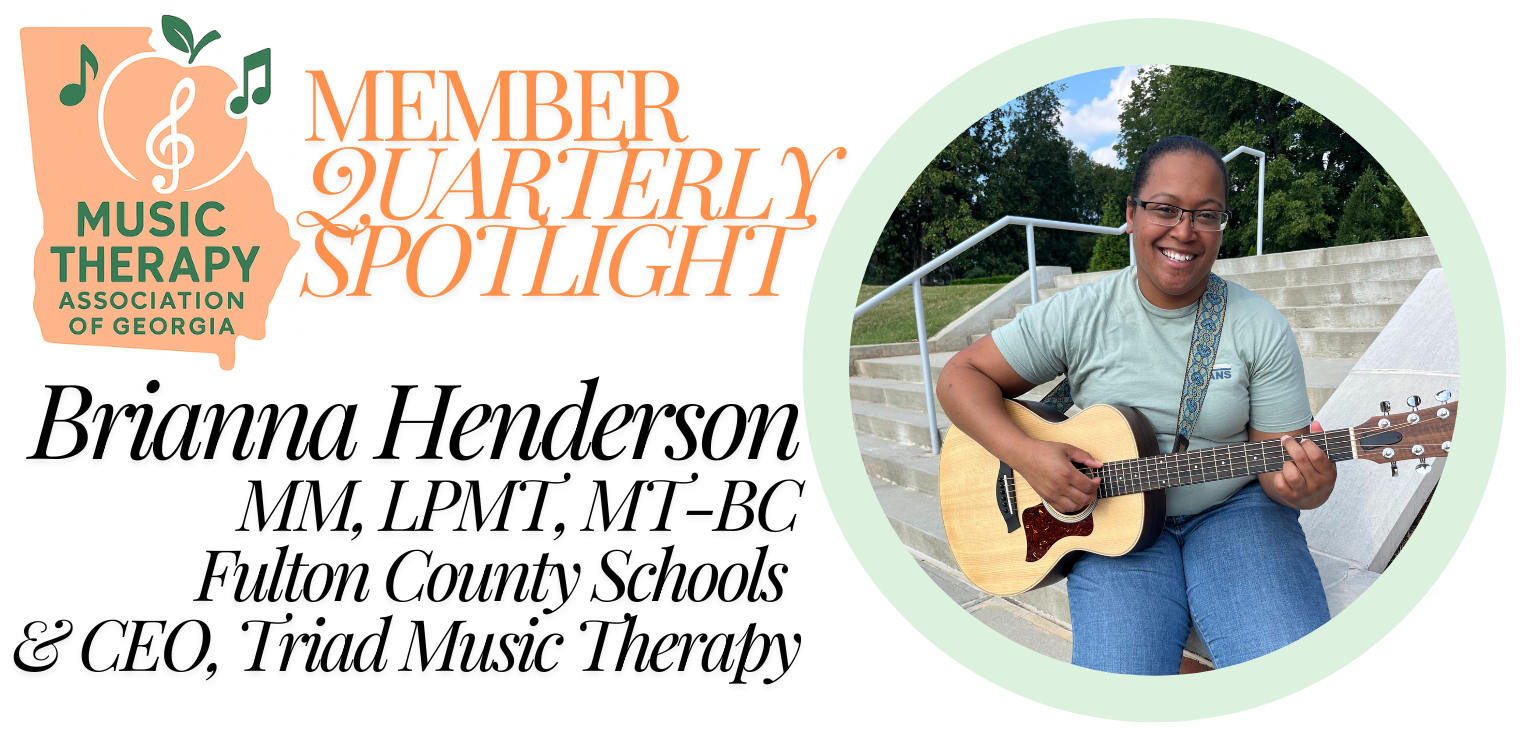
Describe your career as a music therapist - education, population served, etc.
I earned my bachelor’s degree in music therapy from East Carolina University and my master’s in music therapy from Colorado State University. Over the years, I have worked with a variety of populations, but I focus much of my practice on helping individuals improve communication, motor skills, and social interaction through music. My clients range across the lifespan, and I’m passionate about using music to empower them in ways that are both therapeutic and meaningful.
What brought you to the field of music therapy or why did you decide to pursue music therapy as a profession?
I’ve always loved playing music since I was young, and I’ve also had a passion for helping others. In high school, I chose music therapy as the focus of my senior project and had the opportunity to shadow a music therapist. That’s when everything clicked for me and I immediately knew that this was the path I wanted to take. It combined my love for music with my desire to make a difference in people’s lives.
What suggestions do you have for a novice music therapist?
I would suggest always staying flexible. Don’t be afraid to adapt in the moment, because every client and every session is different. Always ask questions; growth as a music therapist is a constant process of learning, reflecting, and refining.
What are some of your favorite resources?
Outside of journals and articles, I love listening to podcasts. Two of my favorites are the Canadian Music Therapy Podcast and Voices of Music Therapy. I also value resources like Journal of Music Therapy and Music Therapy Perspectives for research, and Voices: A World Forum for Music Therapy for global perspectives.
Tell us about one of your most favorite moments of being a music therapist.
One of my favorite memories is of my very first nonverbal client, whom I met right after completing my internship. He had been diagnosed with autism at age three, and his parents were searching for anything that might help him. I still remember the joy of hearing him speak his very first words in a session. Nine years later, I had the privilege of watching him walk on stage, introduce himself, and play piano for his entire school. Witnessing that journey and knowing music played a role in it is something I will never forget.
Describe a challenge you have had in your career and what you did to overcome it.
A challenge I faced, like many of us, was the impact of COVID-19 in 2020. At the time, I was still in the learning and developing stages of my career, especially with private practice. I had to learn how to pivot, adjust, and grow in ways I hadn’t anticipated. It pushed me to become more creative, flexible, and resourceful. In the end, it helped me strengthen both my skills and my confidence as a music therapist.
What goals do you have for the next few years?
My goal over the next few years is to grow and expand into more areas of Georgia where music therapy is needed. I want to help increase access so that more individuals, families, and communities can experience the benefits of music therapy.
Do you have hobbies outside of music?
Outside of music, I love to travel! Next summer, I’ll be working my way around Asia, exploring new cultures, food, and history. Traveling inspires me personally and professionally, often giving me fresh perspectives that I bring back into my work.
Why are you a member of MTAG?
I joined MTAG to be part of a community of professionals who are passionate about music therapy. Being a member gives me opportunities to learn, share resources, and support one another, while also advocating for the growth of our profession in Georgia.
What else would you like us to know about you?
I’m still learning and growing every day as a therapist, and I really value the opportunities this field gives me to keep developing new skills. I also love being social and connecting with others, whether that’s with colleagues, clients, or new people I meet in my travels.